NYで7年連続ミシュランの「鳥心」がホノルルに!話題の焼き鳥割烹を取材
 staff@makana.fm
ニューヨークの名店が、なぜハワイへ——。
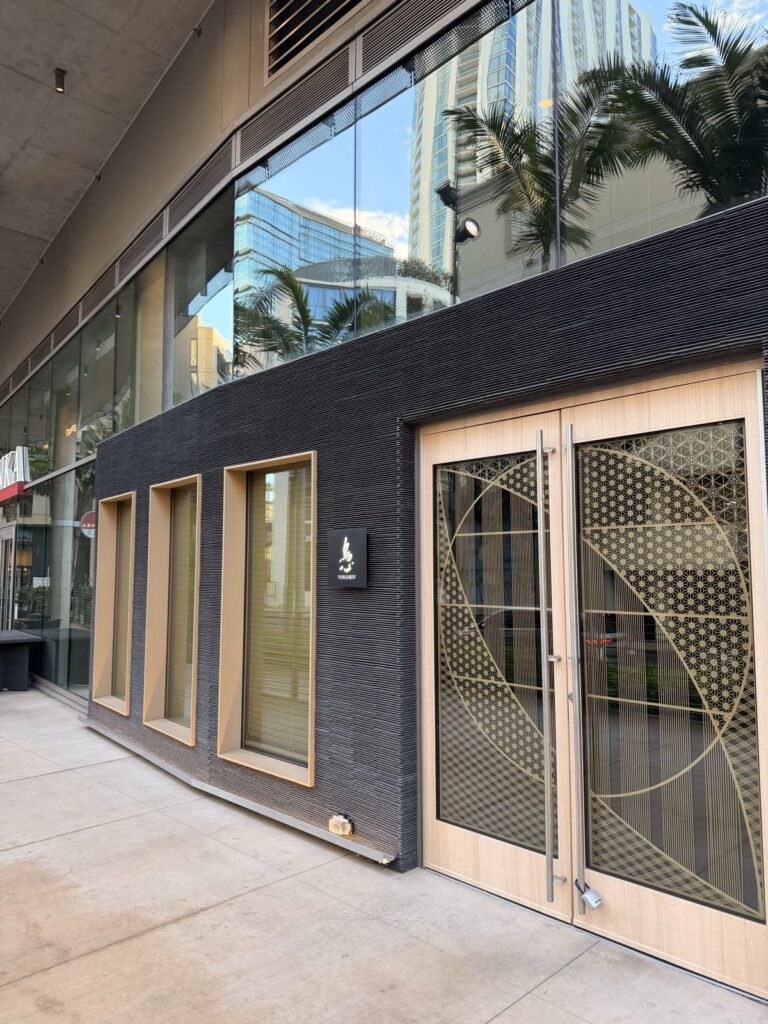
約20年にわたりニューヨークで愛され、ミシュランの星を7年連続で獲得した焼き鳥の名店「鳥心(Yakitori Torishin)」が、ホノルル・カカアコのワードビレッジにオープンしました。
ここで味わえるのは、ただの“焼き鳥”ではありません。
厳選した食材を、職人が一本一本、火入れを見極めながら丁寧に焼き上げていく。前菜から締め、デザートまでを含め、コース全体で焼き鳥の世界を楽しむ、まさに贅を尽くした“焼き鳥割烹”です。
一串ごとに変わる香り、食感、旨み。
そして、その一串の背景にある職人の技とこだわり。
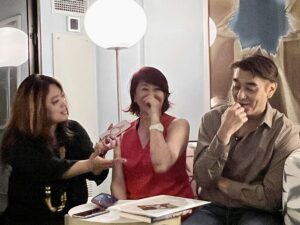
10月6日に1周年を迎えたmakana.fmは、その節目のお祝いも兼ねて、ご縁をいただいた「鳥心」を訪れました。
今回お話を伺ったのは、オーナーシェフの池田修(Shu Ikeda)さん。
ニューヨークで築き上げてきた「鳥心」の歴史、ハワイで店を開くまでの道のり、食材へのこだわり、そしてこれからのハワイ店への思い——。
池田さんのお話を伺いながら、特別なおまかせコースをいただきました。
ニューヨークからハワイへ。
一串一串に込められた「鳥心」の世界を、皆さまにもシェアいたします。
ニューヨークの20年そしてハワイへ
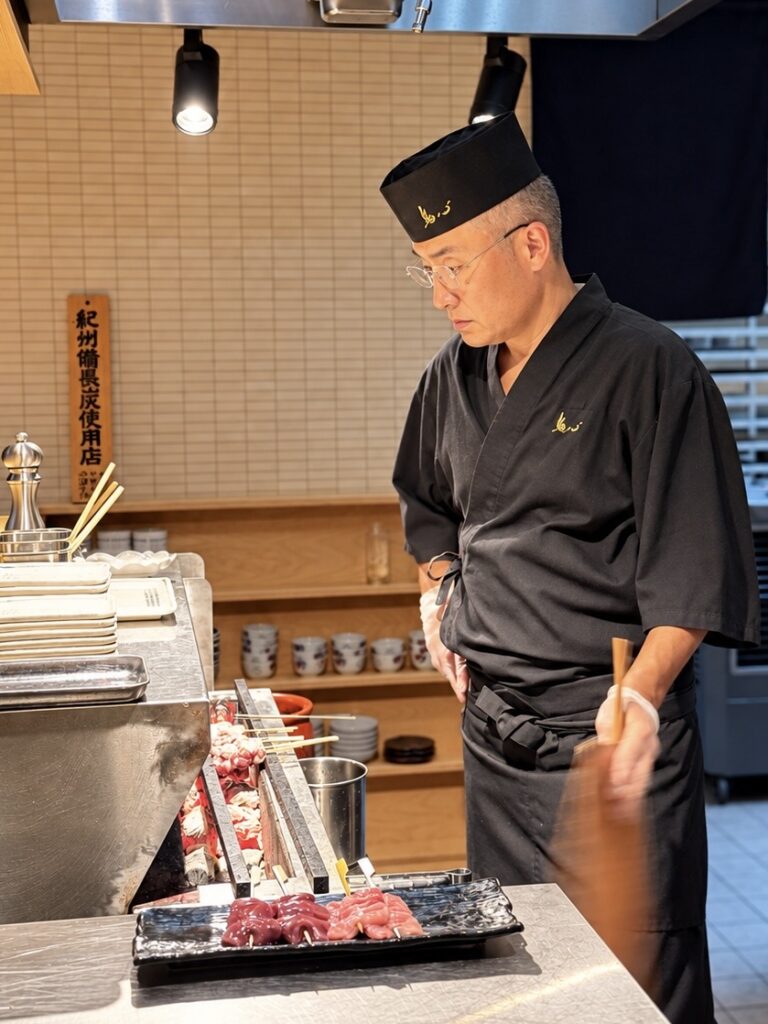
池田さんは、東京・中目黒「鳥よし」の猪股善人さんのもとで修行し、ニューヨークで「鳥心」を始めました。
「僕が初めて焼き鳥をやったときは、お客さんの9割が焼き鳥を食べたことがなくて、『寿司ないのか』って」
当時は、そばも焼き鳥も寿司も、何でもそろう日本食レストランが当たり前。鶏肉を小さく切って串に刺すことも、軟骨のように捨てられがちな部位を料理として出すことも、驚かれたそうです。
それが今では、日本を旅して焼き鳥のおいしさを知った人たちが、「日本で食べたあの味」を求めて訪れるようになりました。
ニューヨークのお店は現在も、30代を中心とする若いチームが支えています。ハワイに来た理由を伺うと、池田さんはこう話してくださいました。
「だんだん年を取ってくると、日本の近くに、という気持ちになってきて。あと10年かなって。じゃあ最後に、ハワイに貢献したい。それが一番」
口癖は「食コミュニケーション」。言葉で説明するよりも、食べれば伝わる、という意味だそうです。
その教えを大切にしながら、池田さんのお店では一皿ごとの説明にも心を配っています。食べて感じるおいしさに、素材や調理の話が重なることで、焼き鳥を味わう楽しみがさらに広がります。
紀州備長炭の強い火力を操る、職人の技
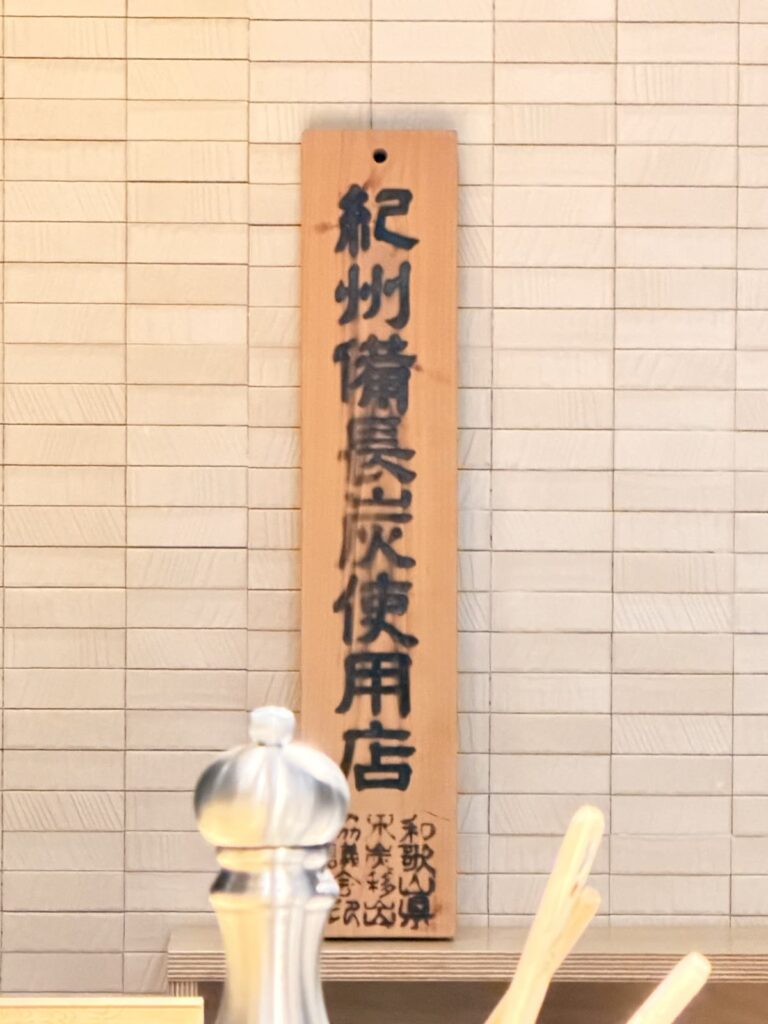
焼き台で使うのは、紀州備長炭。池田さんが大切にしているのは、その遠赤外線の力だといいます。
火力が強いからこそ、熱を逃がしながら丁寧に調整。表面を焦がさず、中まで火を通していく。その繊細な火入れに、職人の技が光ります。
いただいた串は、どれも身が柔らかく、ふっくら。しっかりと火が通っていながらも、硬さを感じさせない絶妙な焼き加減が印象的でした。
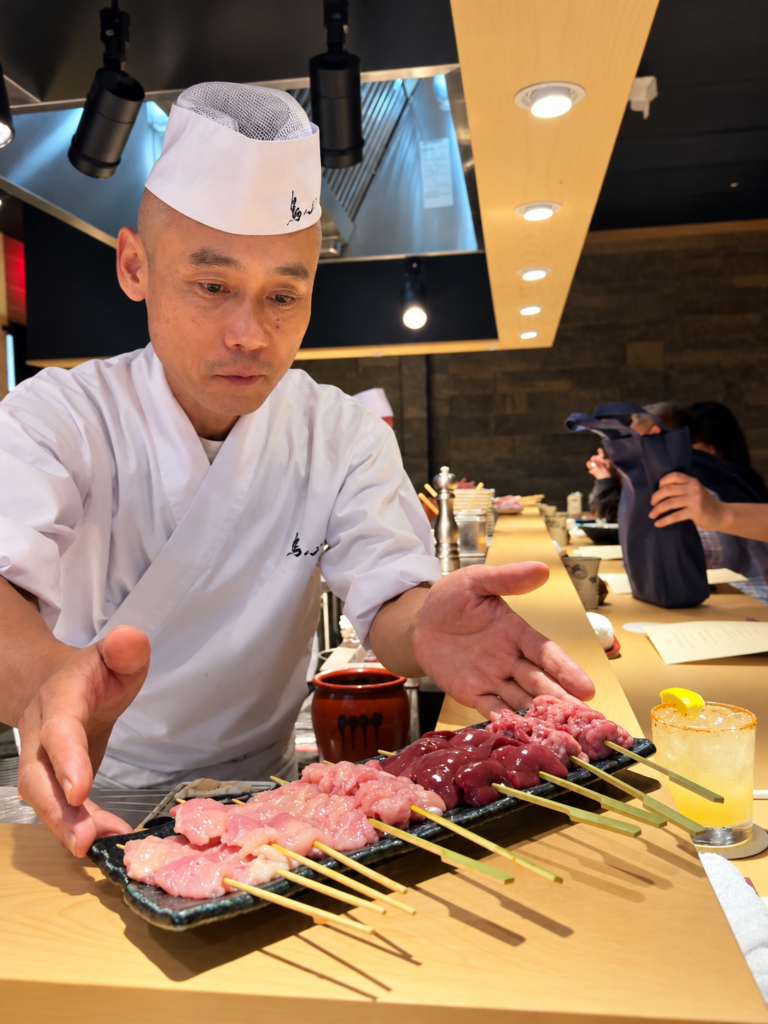
鶏は、ハワイ島から直送されるものをはじめ、ハワイの産地から厳選しています。
どのような環境で育ち、何を食べ、そしてどのように捌かれているのか——。池田さんは実際に産地へ足を運び、その一つひとつをご自身の目で確かめているそうです。
「自分で確かめているからこそ、お客さまに自信を持ってお出しできる」。
その言葉からも、素材と真摯に向き合い、最高の一串を届けようとする池田さんの姿勢が伝わってきます。
そして、そんな池田さんをニューヨーク時代から支えているのが、久和紘士(Koji Kuwa)さん。以前ハワイでも和食料理人として腕を振るい、定評のあった料理人です。
再びハワイの地で、焼き台に立つ久和さんの姿を目にできたことも、とても感慨深いものでした。
池田さんと久和さん。長年培ってきた信頼と職人同士の呼吸が、ハワイの「鳥心」の一串一串にも息づいています。
贅を尽くした、焼き鳥のおまかせコース
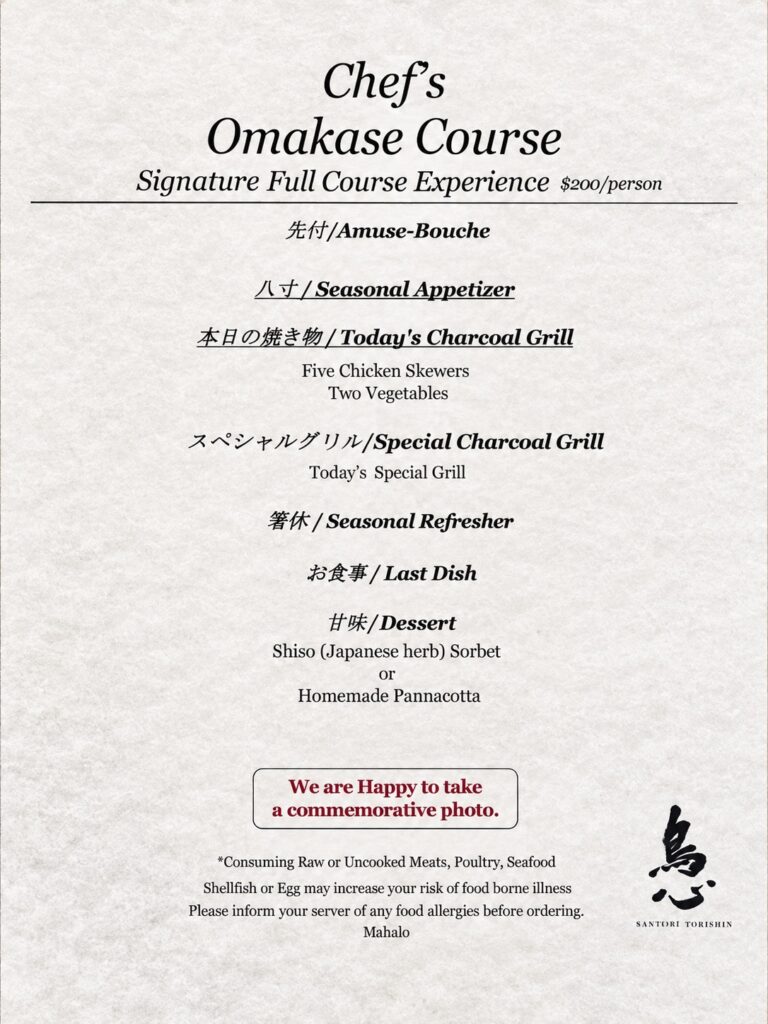
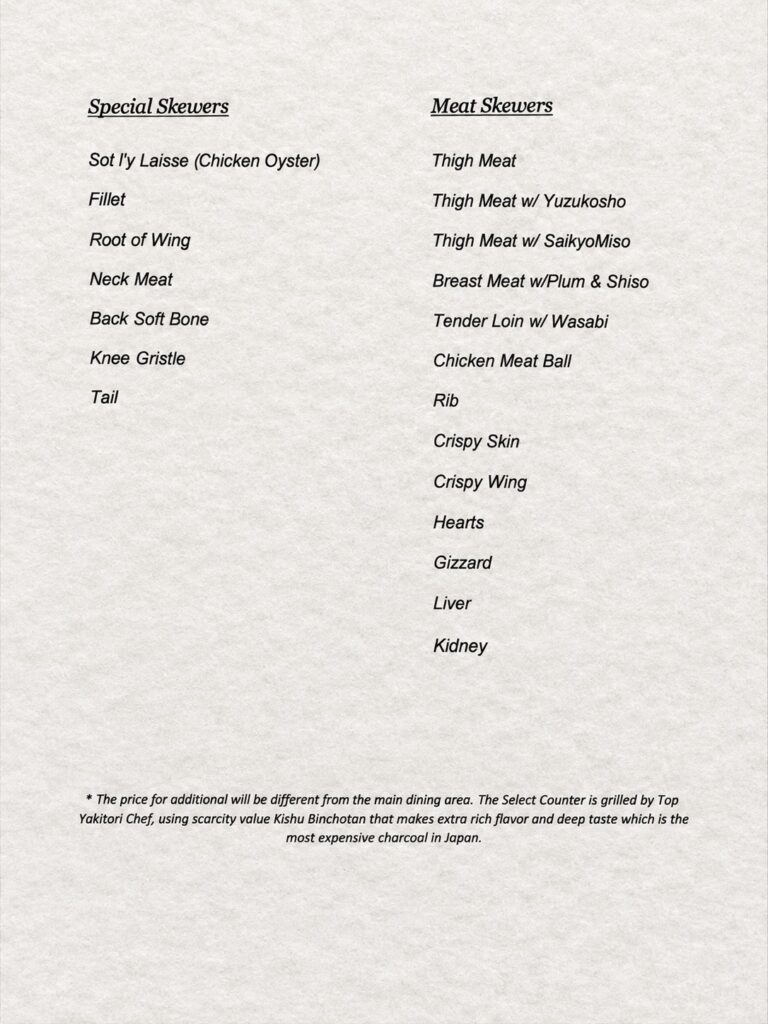
この日のコース(Chef’s Omakase Course)は、お一人 $200。先付、八寸、本日の焼き物(串5本と野菜2品)、スペシャルグリル、箸休め、お食事、甘味と続きます。
先付
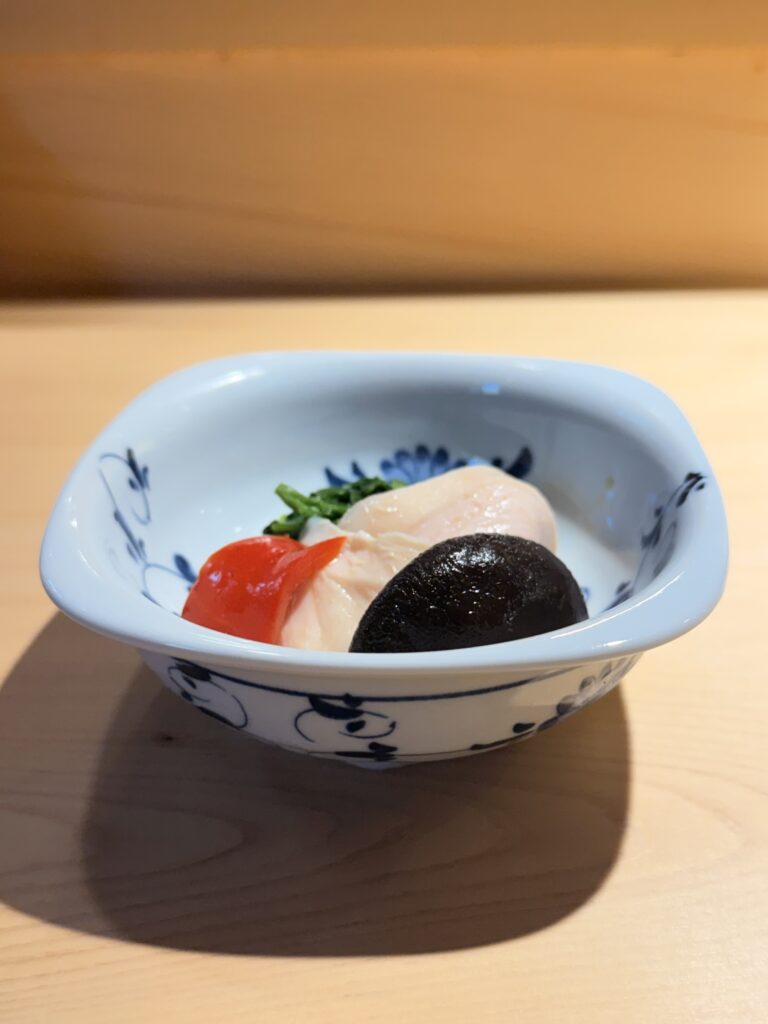
鳥心ならではの素材の良さ、その違いをまず感じていただきたい一皿です。
八寸
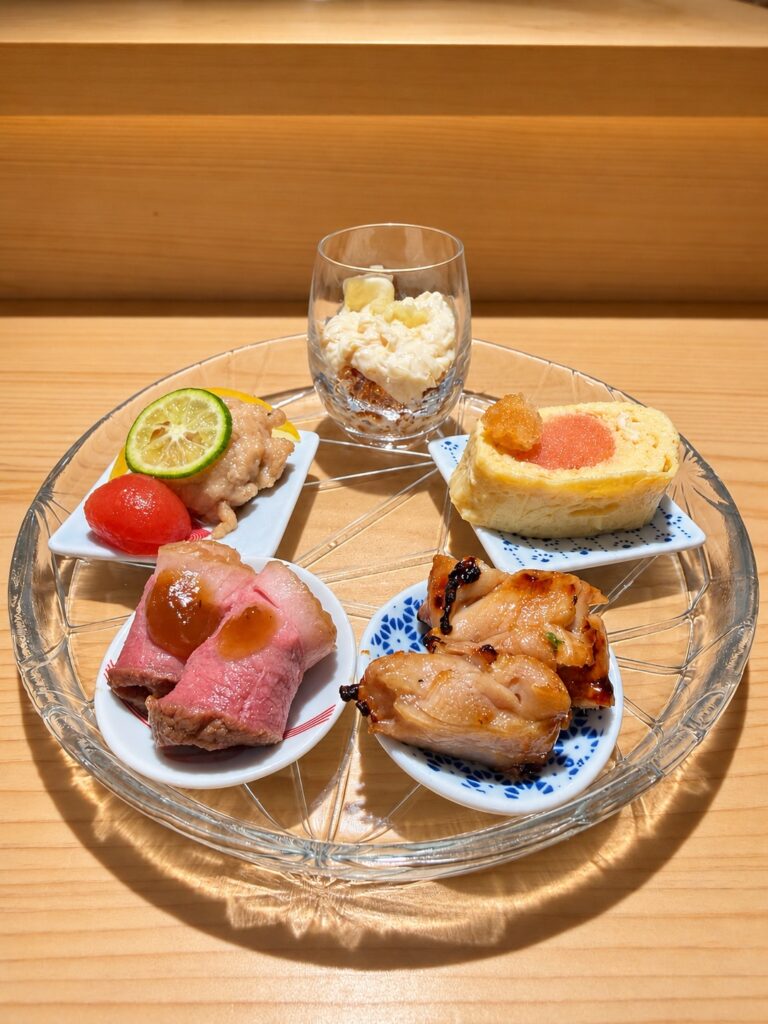
ニューヨークのお店で前菜として人気を集めた品々を、一皿に凝縮した八寸です。
築地の湯葉と出汁のジュレ、最高級たらこを使った出汁巻き卵、7日間西京味噌に漬け込み、柚子を添えた鶏ももの西京焼き。さらに、西京味噌に漬けたクリームチーズを、じっくり焼き上げてスモークした鴨肉で巻いた一品、そして鶏の南蛮漬けが並びます。
時計回りにいただくと、少しずつ味わいが濃くなるように仕立てられています。
串
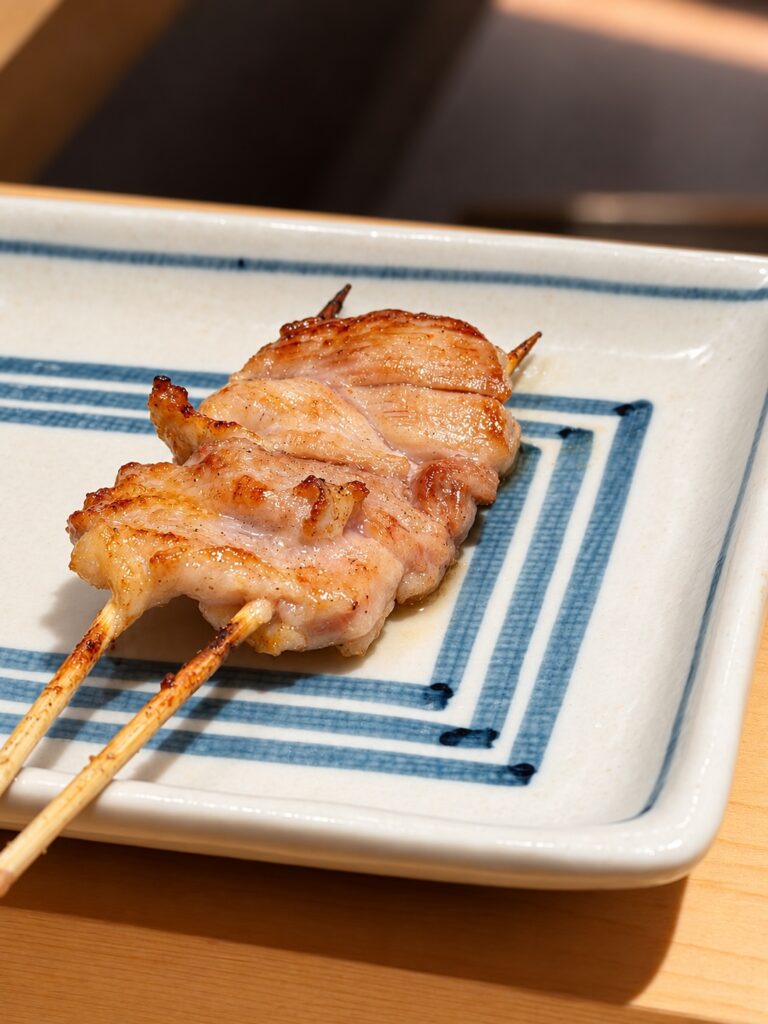
最初の串は、鳥心が自信を持って提供する、ももの赤身「チキンフィレ」。焼きたてをいただきます。
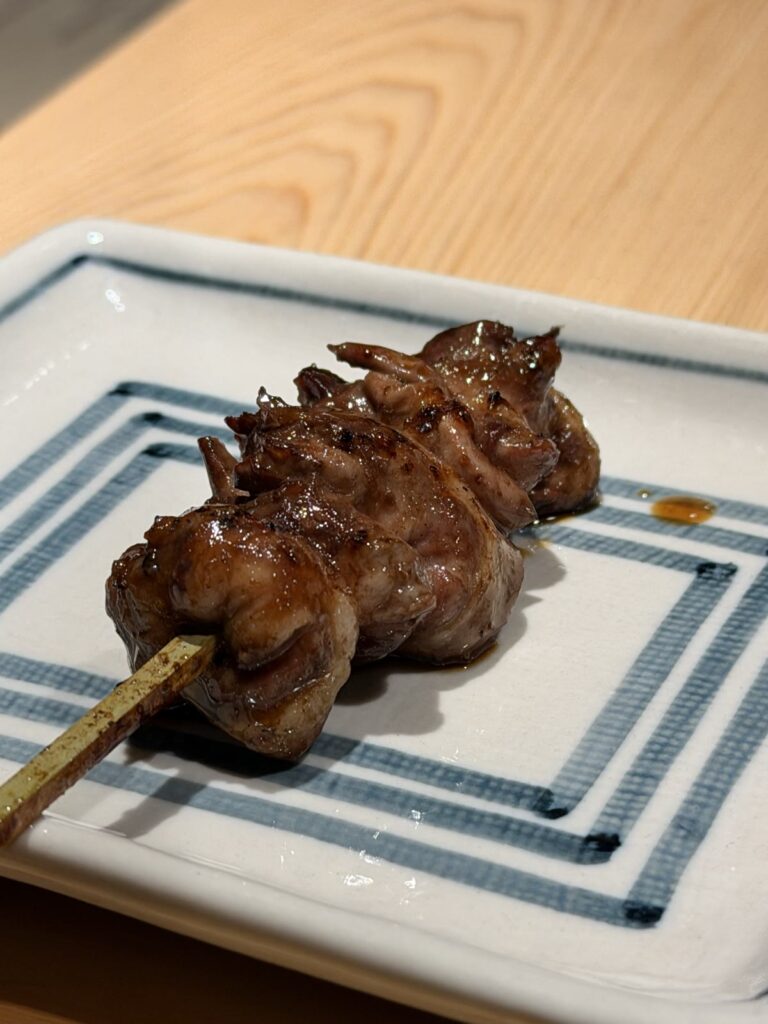
ハツモトは、レバーとハツの間にある希少な部位。ハツともレバーとも異なる、プリッとした独特の食感が楽しめます。タレも濃すぎず、素材の旨みを引き立てる絶妙な味わいでした。
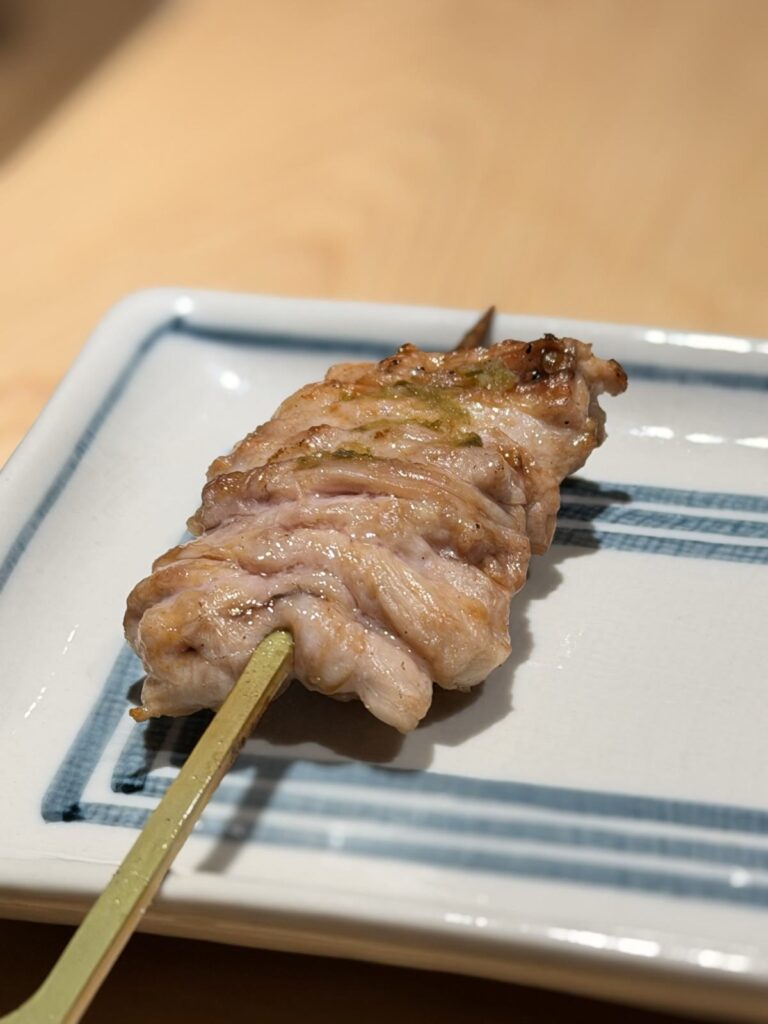
せせりは首のお肉。あえて小骨(軟骨)を残してカットしてあり、コリコリした食感が楽しめます。塩は控えめで、柚子胡椒を添えて。
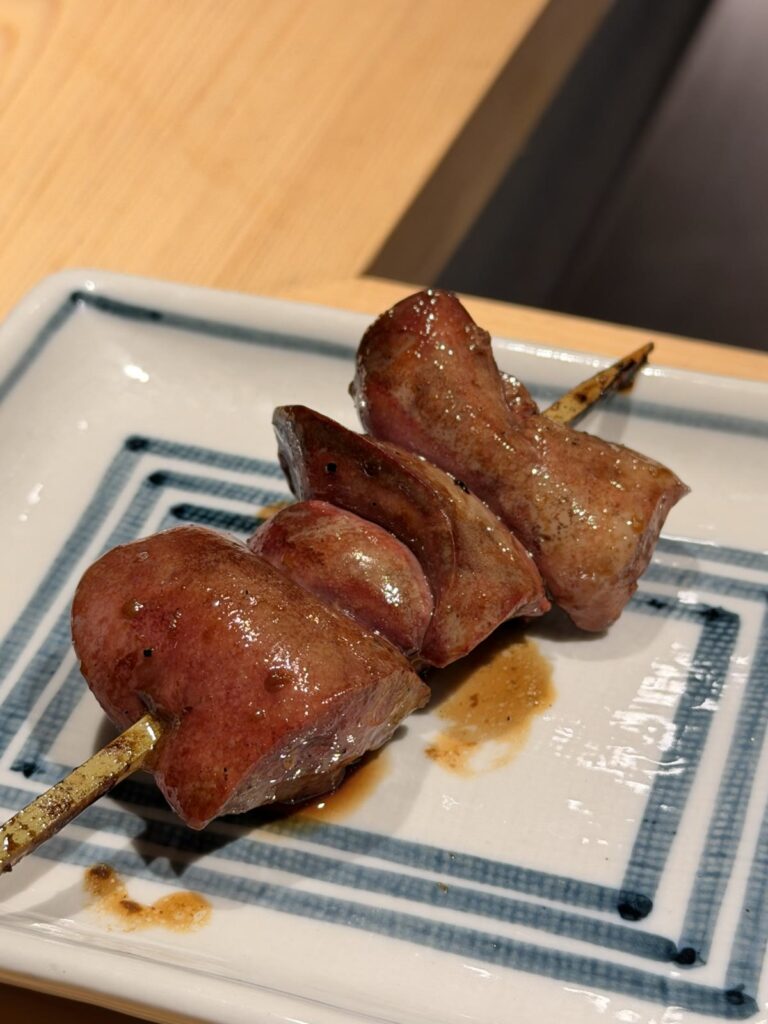
レバーは、まるでフォアグラのような口どけ。山椒を添えていただきます。「焼き鳥屋さんに行ったら、必ずレバーを食べてください。その店の鶏の質がわかります」と池田さんは話します。
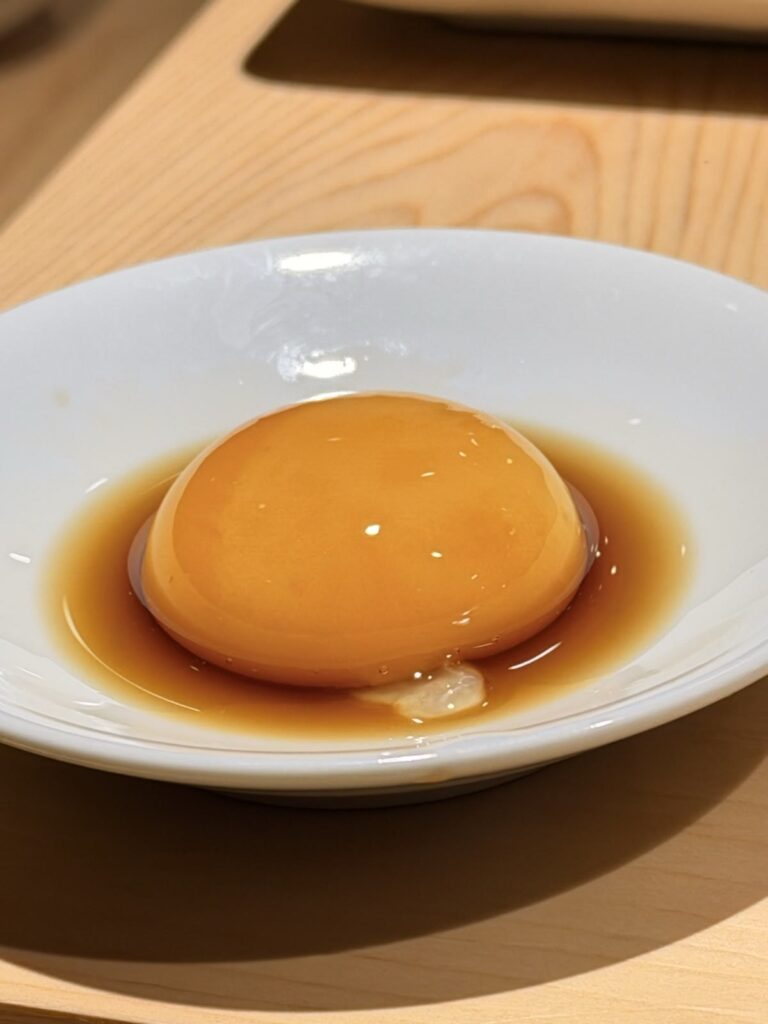
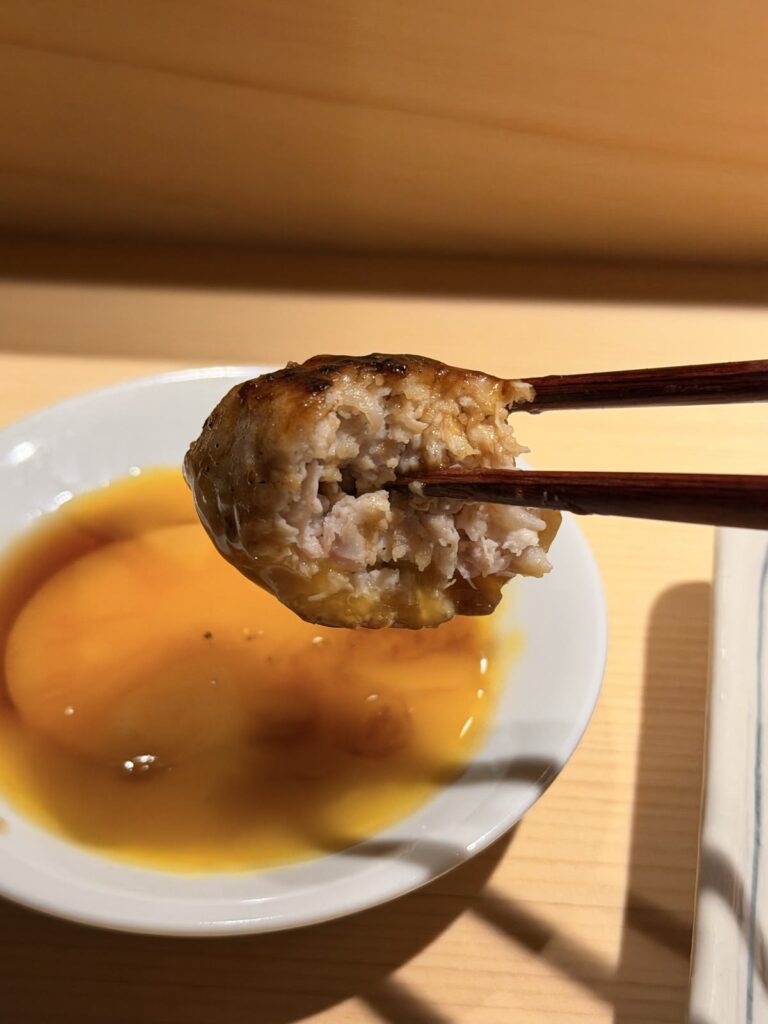
つくねは、カリフォルニア産の卵の黄身にくぐらせていただきます。美しい黄身がつくねに絡み、上品な味わいを楽しめます。
野菜
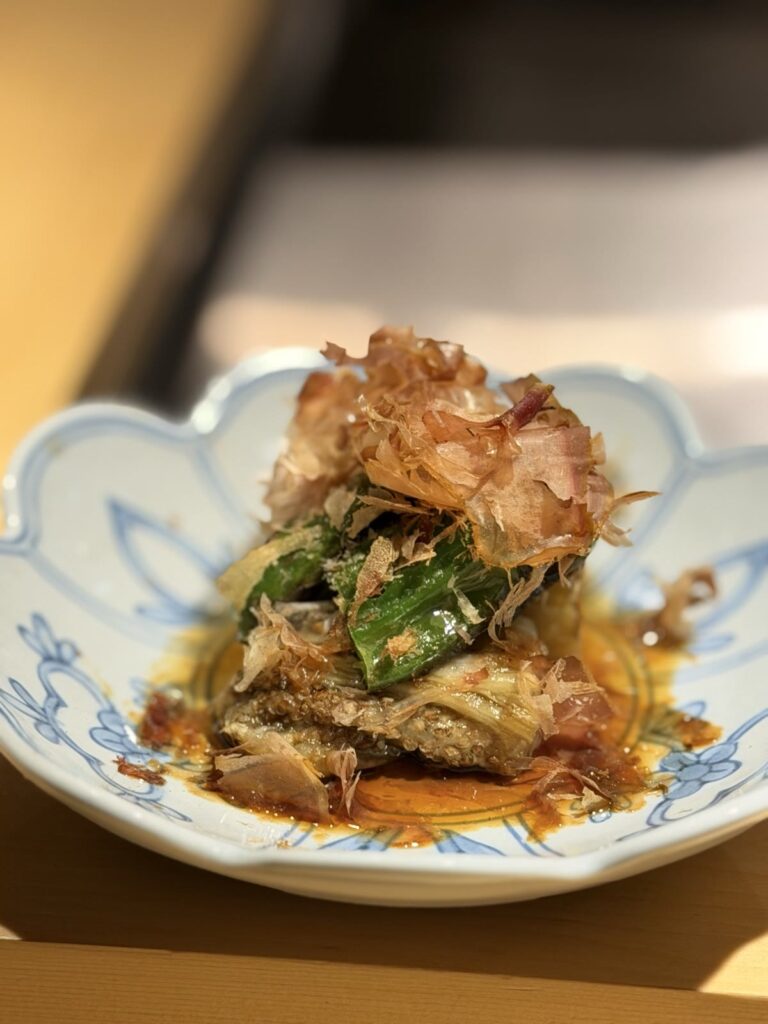
ローカルのなすとししとうに、おかかをのせて生姜醤油で。なすから紀州備長炭の香りがふわっと立ちます。
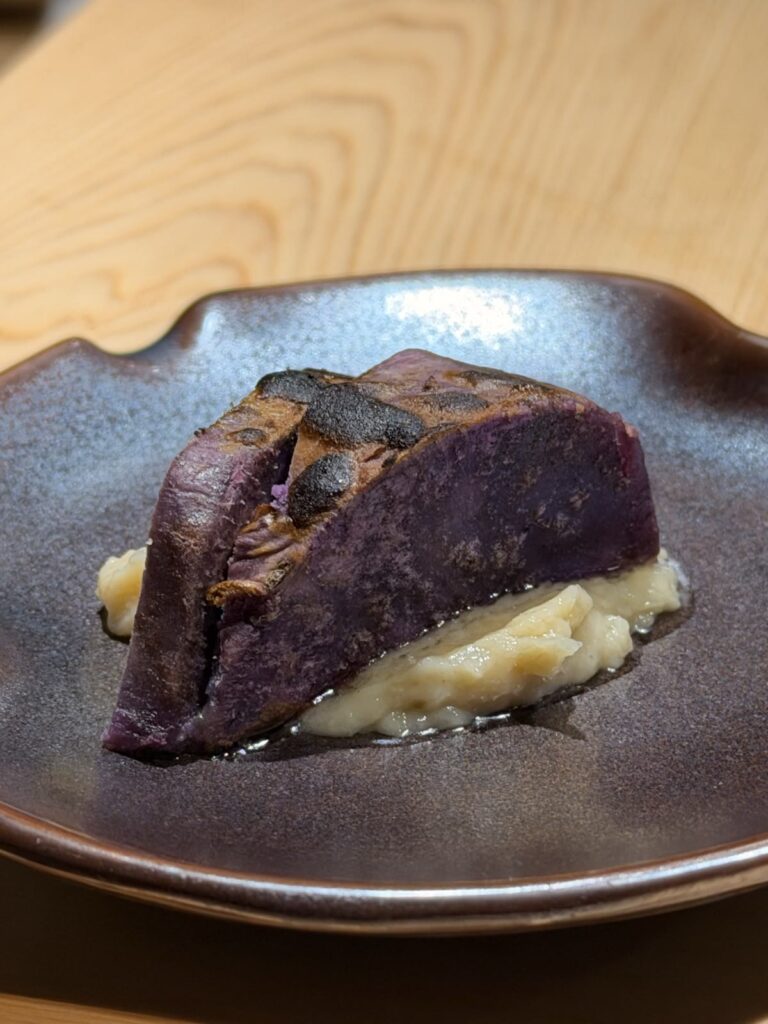
沖縄のスイートポテトの下には、味噌を加えてゆっくり煮込んだバーニャカウダソース。和の風味があり、芋の甘みとソースの塩気の対比が楽しい一皿です。
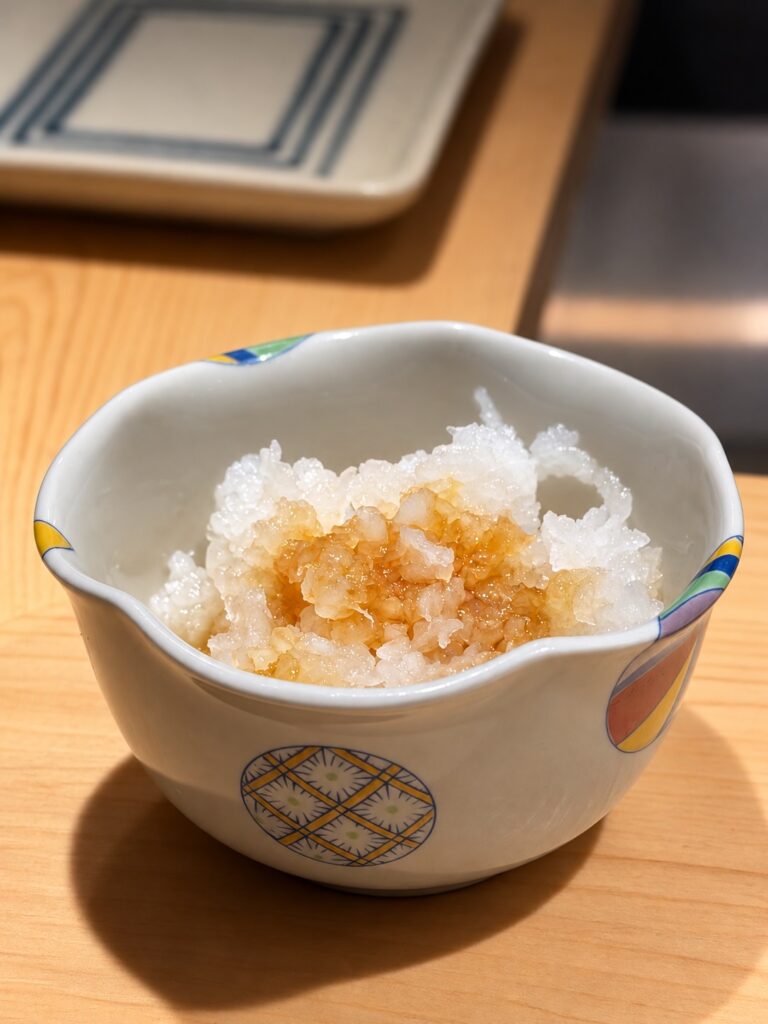
お口直しには、鬼おろしを。粗い粒のシャキシャキとした食感とみずみずしさが、口の中をさっぱりと整えてくれます。
スペシャルグリル:うなぎ
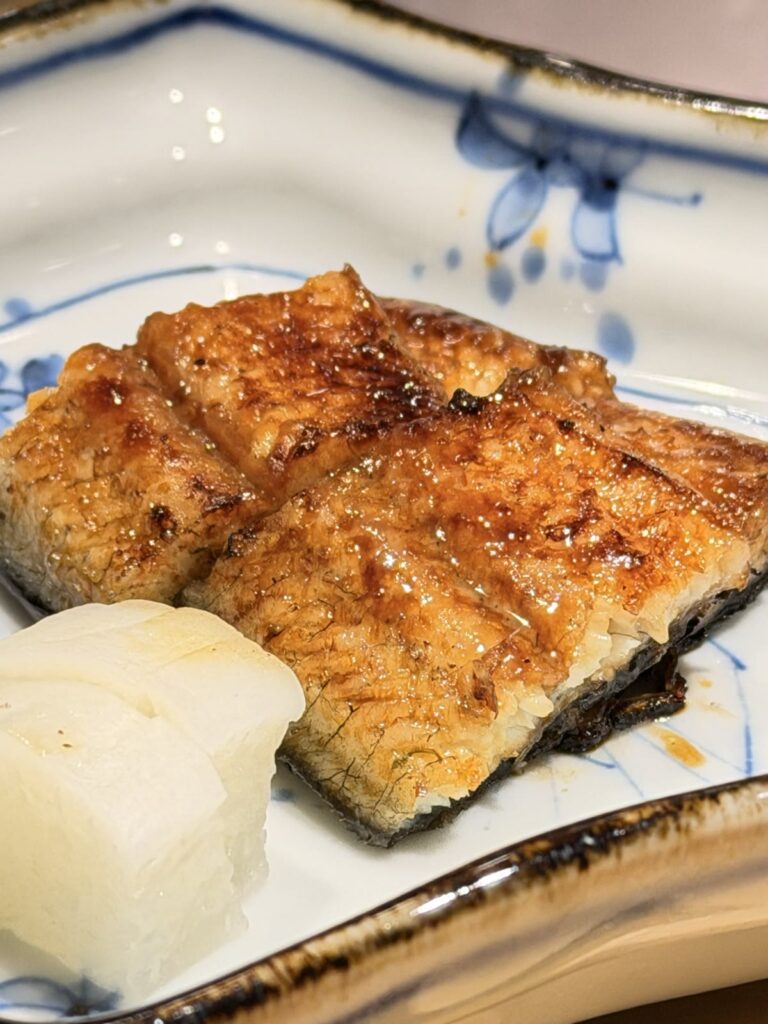
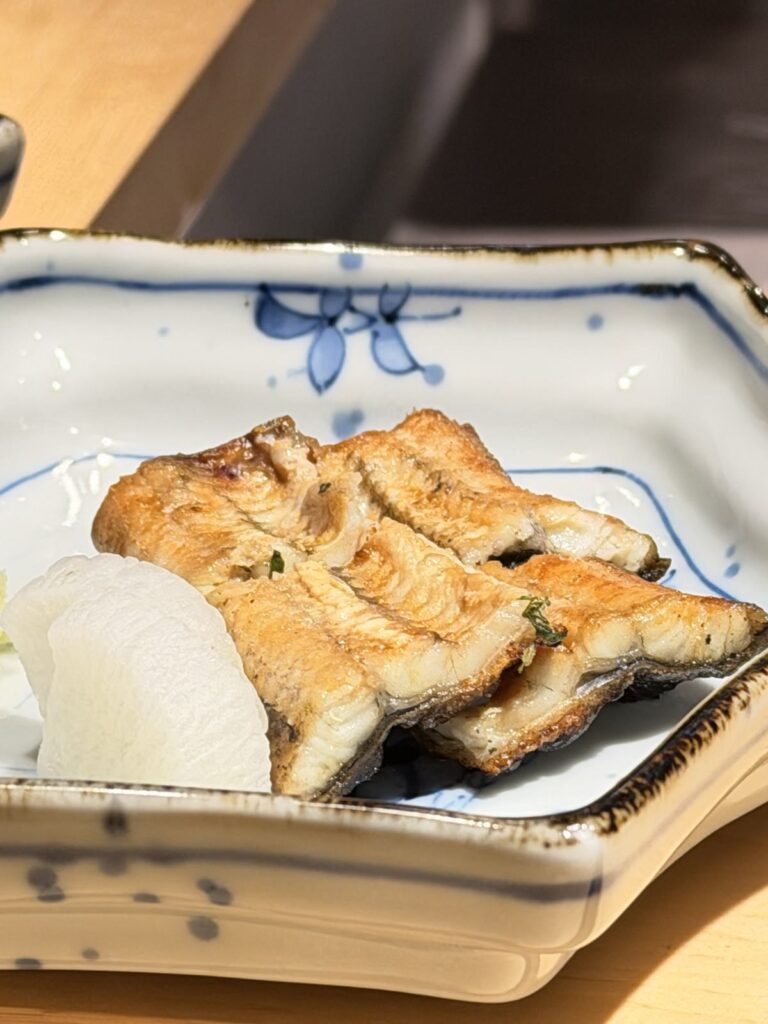
この日のスペシャルグリルは、愛知県産のうなぎを白焼きかタレで。皮はパリパリ、身はふっくら。鶏料理を堪能するコースの中で、うなぎにも池田さんの焼きの技が光り、嬉しい驚きの一皿となりました。
箸休め・スープ・お食事
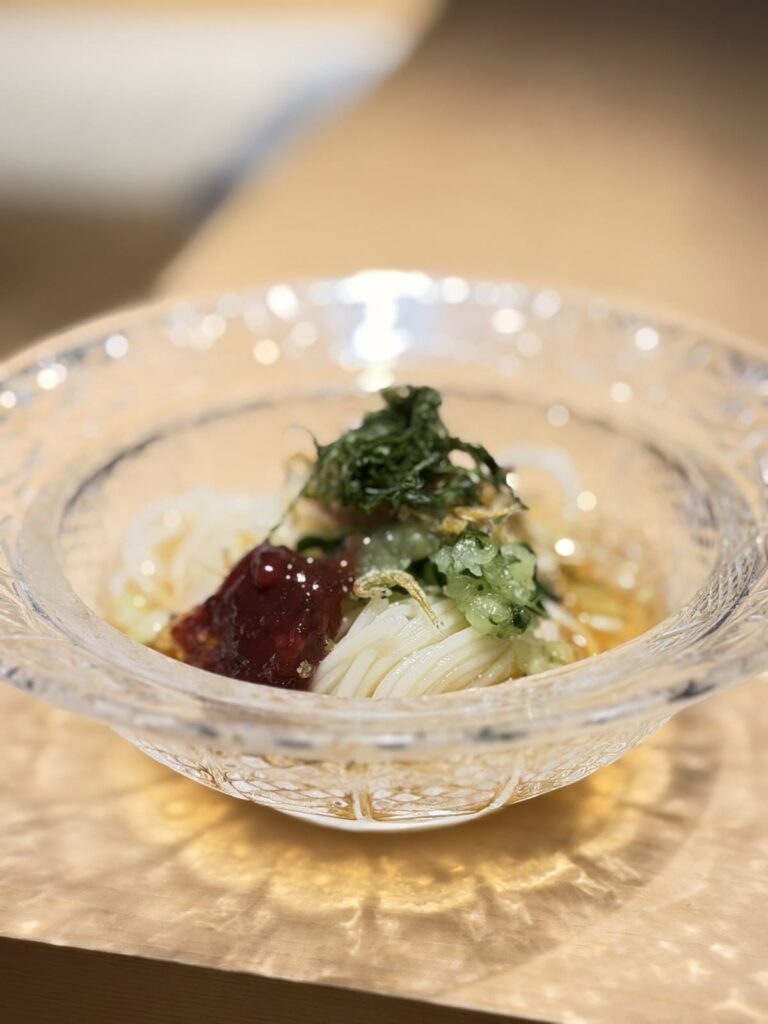
箸休めは、しそ、みょうが、梅、きゅうり、しらすをのせたそうめん。ひと口すすると梅がふわりと香り、薬味の風味としらすの旨みが重なります。
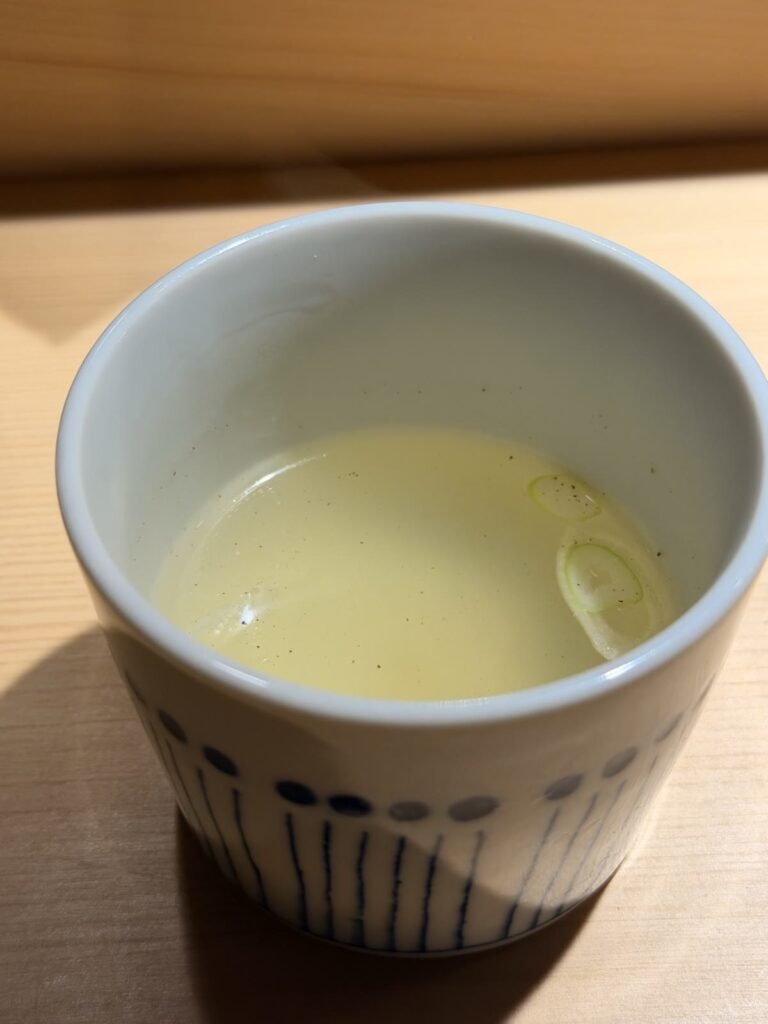
8時間かけてじっくり煮込んだ鶏スープは、あっさりとした口当たり。それでいて鶏の旨みがしっかりと感じられ、思わずもうひと口と飲みたくなる味わいです。
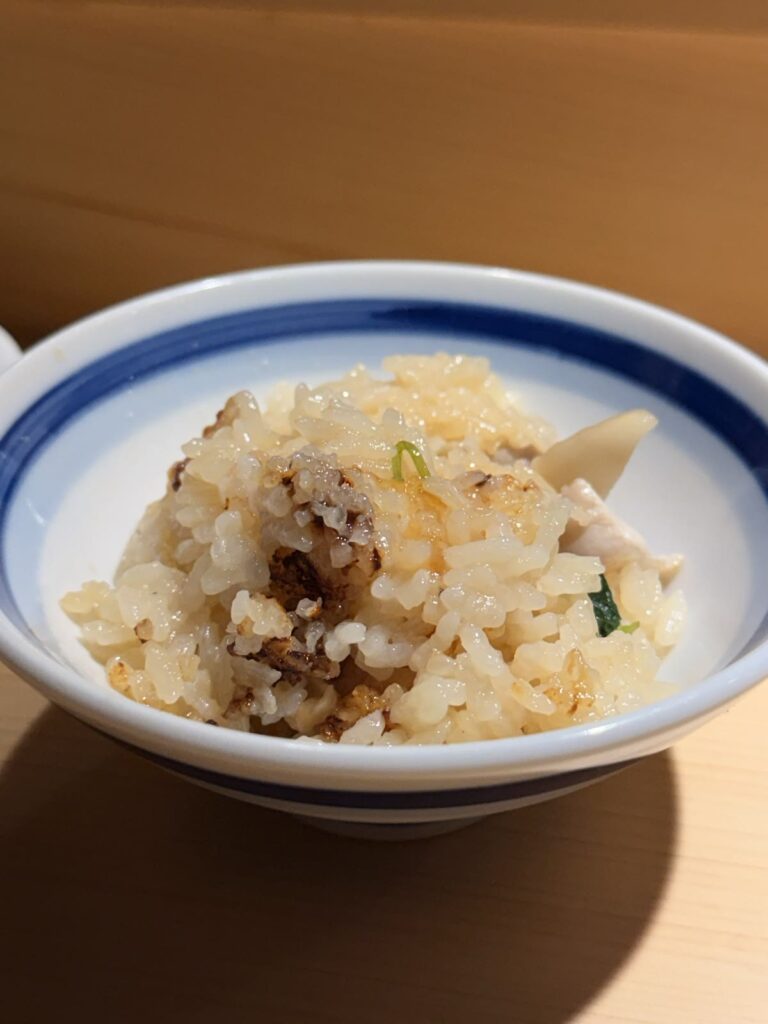
お食事は、土鍋で炊き上げた松茸と鶏のご飯。松茸の香りと鶏の旨みに、ほんのり香ばしいおこげが加わります。ハワイにいながら日本の秋を感じられる、上品な味わいでした。
甘味
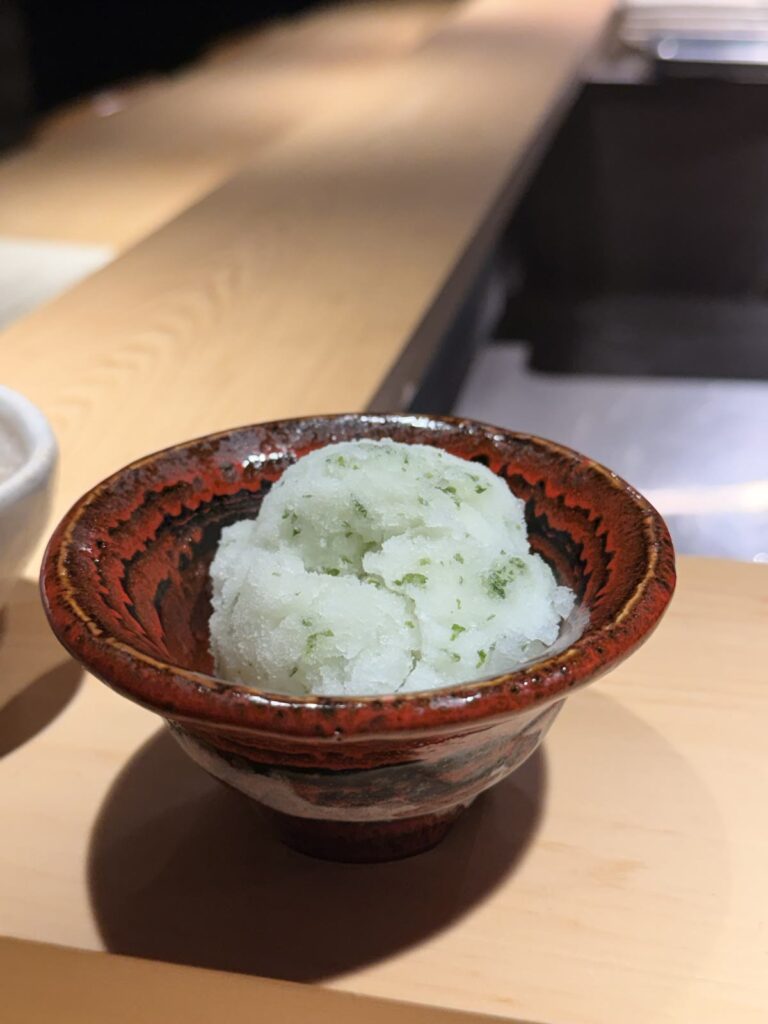
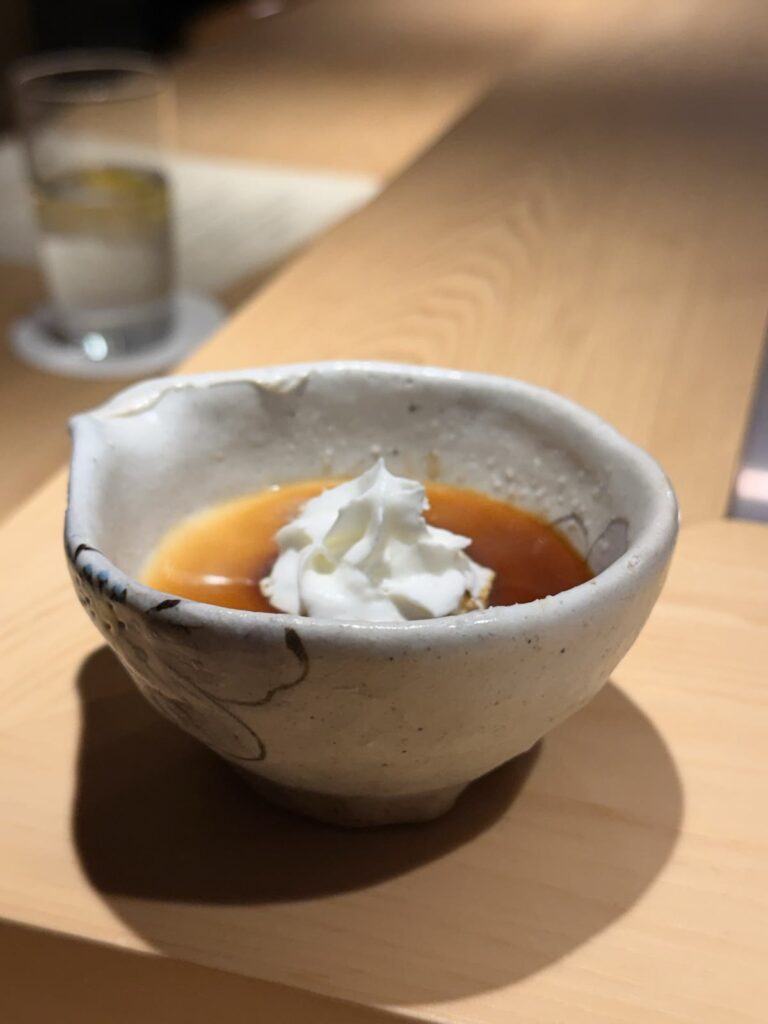
デザートは、しそシャーベットと手作りのパンナコッタ。
しそシャーベットは、ニューヨークの鳥心を代表する一品。池田さんによると、お店そのものより先にニューヨーク・タイムズに取り上げられ、評判になったのが、このシャーベットだったそうです。ハワイでも同じ味を楽しめます。しそが香る、ちょっとユニークな味わい。ぜひ試してみてください。
飲物
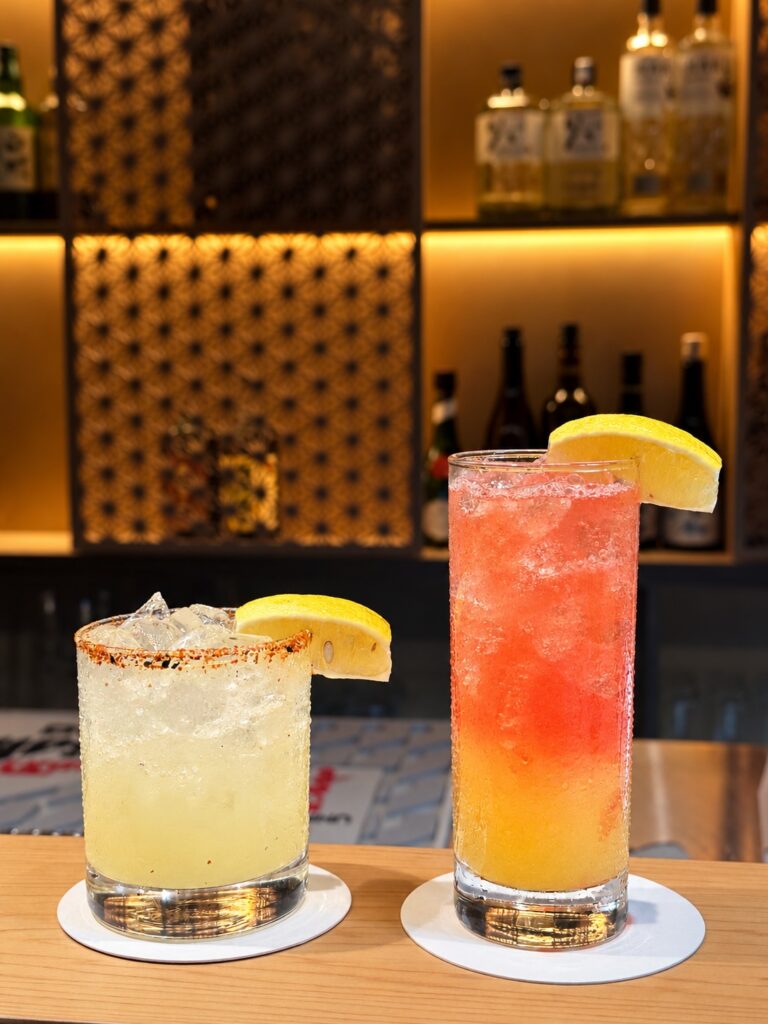
食前にバーカウンターで飲んだアルコールなしのモクテル
美しいカクテルをはじめ、厳選された日本酒、日本のウイスキー、さらにハワイで造られた日本酒や焼酎まで、ドリンクのセレクションにもこだわりが光ります。
シャンパンには、特別な一杯としてドン ペリニヨンもラインナップ。
料理とのペアリングを楽しむのはもちろん、食後にバーへ移り、選び抜かれたお酒を一杯ずつゆっくりと味わうのもおすすめです。
お店の情報
焼き鳥 鳥心(Yakitori Torishin)
1001 Queen Street, Ward Village Aeʻo Space No.104, Honolulu, HI 96814
【営業時間・予約】
ソフトオープンの現在は以下から時間予約を↓↓↓
https://resy.com/cities/honolulu-hi/venues/torishin-hawaii
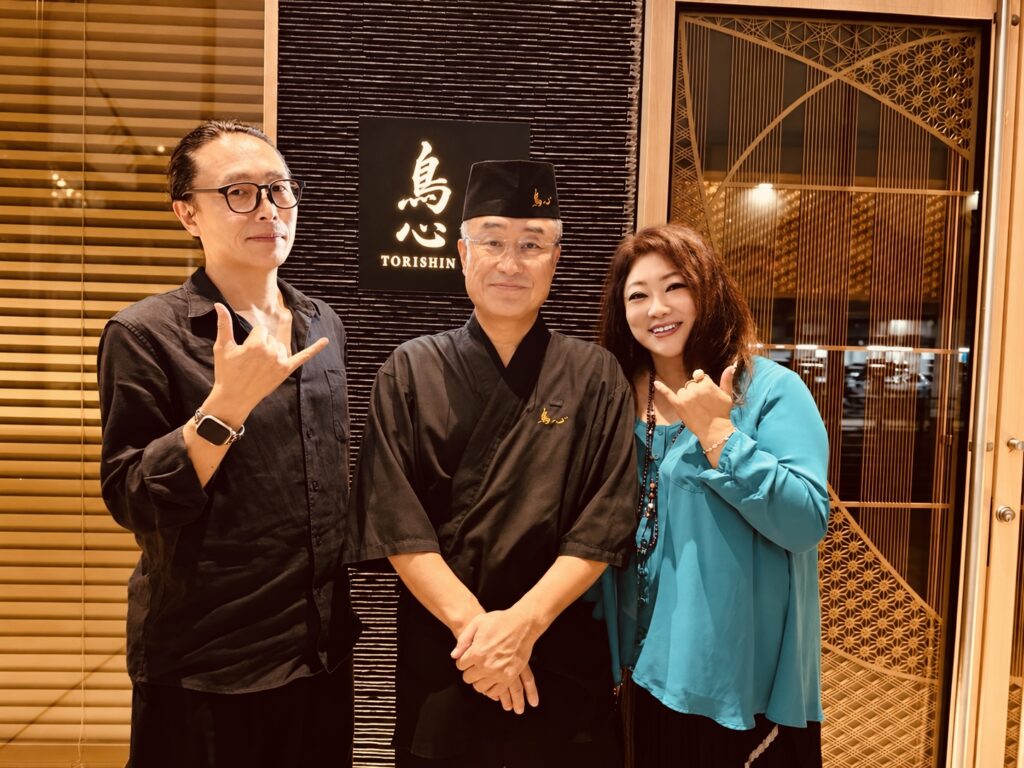
池田さんと初めてハワイでお会いしたのは、昨年6月。
その時から、ハワイ店にかけるビジネスマンとしての情熱はもちろん、素材、火入れ、焼きに向き合う料理人としてのこだわりをじっくりと伺っていました。
だからこそ、池田さんご自身が焼き台に立ち、その一串をいただけるこの日を心待ちにしていました。
「あと10年は、ハワイでお役に立ちたい。」
その言葉は、ハワイから新たな一歩を踏み出した私たちmakana.fmの思いとも重なります。
ニューヨークで培ってきた技と経験を携え、いよいよハワイで新たな一歩を踏み出した「鳥心」。
ここハワイで、これからどんな物語を紡いでいくのでしょうか。
「鳥心」ハワイ店。
ここから、新たな歴史が始まります。
池田さん、改めておめでとうございます✨
グランドオープンの際には、ぜひまたお話を聞かせてください。
New York’s Acclaimed Yakitori Torishin Soft Opens in Honolulu
A closer look at the celebrated yakitori restaurant’s new home in Ward Village, Kakaʻako
After nearly two decades in New York and seven consecutive years of earning a Michelin star, acclaimed yakitori restaurant Yakitori Torishin has arrived in Honolulu.
Located on the ground floor of Aeʻo in Ward Village, Kakaʻako, Torishin Hawaii offers far more than simply grilled chicken on skewers.
Here, carefully selected ingredients are prepared one skewer at a time, with each piece grilled over charcoal and its heat precisely controlled by skilled chefs. From appetizers and seasonal dishes to the final rice course and dessert, the entire experience unfolds as a refined yakitori omakase — an elevated expression of Japanese culinary craftsmanship.
Each skewer brings a different aroma, texture and flavor.
And behind every bite is the skill, discipline and philosophy of the chefs who prepare it.
Makana.fm celebrated its first anniversary on October 6, and to mark the occasion, we visited Torishin, a restaurant with which we have been fortunate to build a connection.
We sat down with owner-chef Shu Ikeda to hear about Torishin’s nearly 20-year journey in New York, the road that brought him to Hawaiʻi, his uncompromising approach to ingredients and grilling, and his hopes for the restaurant’s future here.
Over the course of the evening, we enjoyed his special Chef’s Omakase Course while hearing the stories behind the food.
From New York to Hawaiʻi, here is a closer look at the world of Torishin — one skewer at a time.
Nearly 20 Years in New York — and a New Chapter in Hawaiʻi
Chef Ikeda trained under Yoshihito Inomata of Toriyoshi in Nakameguro, Tokyo, before eventually bringing his craft to New York and establishing Torishin.
“When I first started serving yakitori, about 90 percent of the customers had never eaten it before,” Ikeda recalled. “People would ask, ‘Don’t you have sushi?’”
At the time, many Japanese restaurants in New York offered a little bit of everything — sushi, soba, grilled dishes and more.
The idea of cutting chicken into small pieces, placing them on skewers, and serving cuts such as cartilage and offal that many diners had never encountered was still unfamiliar.
Today, things have changed dramatically.
More people travel to Japan, discover authentic yakitori there, and later come to Torishin looking to experience “that taste they had in Japan” once again.
Torishin’s New York restaurant continues to be supported by a younger team, many of them in their 30s.
When we asked Ikeda why he chose Hawaiʻi for his next chapter, his answer was simple and heartfelt.
“As I get older, I find myself wanting to be a little closer to Japan,” he said. “Maybe I have another 10 years. So for this final chapter, I want to contribute to Hawaiʻi. That’s the most important thing.”
One of his mentor’s favorite expressions is “food communication.”
The idea is that food can communicate something that words cannot.
That philosophy remains central to Torishin.
At the same time, Ikeda believes that thoughtful explanations of the ingredients and preparation can deepen a guest’s appreciation. When the story behind a dish is added to the experience of tasting it, yakitori becomes even more meaningful.
Mastering the Heat of Kishu Binchotan Charcoal
Torishin grills its yakitori over Kishu binchotan, a premium Japanese white charcoal prized for its intense and steady heat.
For Ikeda, the key is not simply applying strong heat, but knowing how to control it.
Because binchotan burns at such a high temperature, the chefs constantly adjust the position of each skewer, allowing excess heat to escape while cooking the chicken evenly from the outside in.
It is a subtle technique that requires experience, precision and instinct.
Every skewer we tasted was tender and beautifully plump, fully cooked yet never dry or tough.
That balance is where the craft of the yakitori chef truly reveals itself.
Knowing Exactly Where the Chicken Comes From
Torishin carefully selects chicken from local Hawaiʻi producers, including birds sourced directly from Hawaiʻi Island.
For Ikeda, knowing the source is essential.
How were the chickens raised?
What were they fed?
How were they processed?
Ikeda visits producers himself and checks these details with his own eyes.
“Because I’ve seen it for myself, I can serve it to our guests with confidence,” he told us.
His words reflect a deep respect for the ingredients and a determination to stand behind every skewer that leaves the grill.
Another chef who has supported Ikeda since his New York days is Koji Kuwa, a respected Japanese chef who was also well known in Hawaiʻi for his work in Japanese cuisine.
Seeing Kuwa once again standing behind the grill here in Hawaiʻi was especially meaningful.
The trust and rhythm built over years between Ikeda and Kuwa can be felt in the kitchen — and in every skewer served at Torishin Hawaii.
A Refined Yakitori Omakase Experience
The Chef’s Omakase Course we experienced was priced at $200 per person during our visit.
The menu included a starter, hassun appetizer course, five yakitori skewers, two vegetable dishes, a special grilled course, a refreshing palate cleanser, soup, a rice course and dessert.
Starter
The opening dish is designed to introduce guests to the quality of Torishin’s ingredients and the care taken in their preparation.
It is a quiet introduction to what follows.
Hassun
The hassun brings together several dishes that became popular appetizers at Torishin’s New York restaurant.
The selection included Tsukiji yuba with dashi jelly, Japanese rolled omelet made with premium tarako, and chicken thigh marinated in Saikyo miso for seven days and finished with yuzu.
There was also Saikyo miso-marinated cream cheese wrapped in slowly grilled and smoked duck, along with nanbanzuke-style marinated chicken.
The dishes are arranged so that, when enjoyed clockwise around the plate, the flavors gradually become richer and more pronounced.
Yakitori Skewers
Chicken Fillet
Our first skewer was Torishin’s chicken fillet, made from the lean portion of the thigh.
Served straight from the grill, it immediately showcased the tenderness of the meat and the precision of the cooking.
Hatsumoto
Hatsumoto is a rare cut found between the heart and liver.
Its texture is unlike either one — pleasantly springy and distinctive.
Finished with tare sauce, the skewer was rich without being heavy, with a beautifully balanced seasoning that allowed the flavor of the chicken to remain at the center.
Seseri
Seseri comes from the neck of the chicken.
At Torishin, small pieces of cartilage are intentionally left in the cut, adding a satisfying crunch to the tender meat.
The seasoning is restrained, with yuzu kosho served alongside to add brightness and spice.
Liver
The liver was remarkably smooth and creamy, with an almost foie gras-like texture.
It was served with sansho pepper.
“When you go to a yakitori restaurant, always try the liver,” Ikeda told us. “You can tell the quality of the chicken from the liver.”
Tsukune with Egg Yolk
Torishin’s tsukune is served with a rich egg yolk from California.
The chicken meatball is dipped into the glossy yolk before eating, coating it in a silky richness and creating an elegant, deeply satisfying combination.
Vegetables
Local Eggplant and Shishito Peppers
Local eggplant and shishito peppers were served with bonito flakes and ginger soy sauce.
The eggplant carried a delicate aroma from the Kishu binchotan charcoal, adding another layer of flavor to the vegetables.
Okinawan Sweet Potato
Okinawan sweet potato was served over a bagna càuda-style sauce slowly cooked with miso.
The sweetness of the potato played beautifully against the gentle saltiness and umami of the sauce, creating a dish that felt both Japanese and contemporary.
Oroshi Palate Cleanser
A refreshing serving of coarsely grated daikon, known as oni-oroshi, arrived between courses.
Its crisp texture and high moisture content refreshed the palate and prepared us for the dishes that followed.
Special Grill: Unagi
The special grilled course of the evening featured unagi from Aichi Prefecture, offered either shirayaki-style without sauce or finished with tare.
The skin was crisp while the flesh remained tender and fluffy.
In the middle of a menu centered on chicken, the unagi was an unexpected delight — and another opportunity to appreciate Ikeda’s mastery of the grill.
Somen, Chicken Soup and the Rice Course
Somen
The palate-cleansing somen was topped with shiso, myoga, ume, cucumber and shirasu.
With the first bite, the fragrance of ume gently emerged, followed by the fresh aroma of the herbs and the savory flavor of the tiny fish.
Eight-Hour Chicken Soup
Torishin’s chicken soup is simmered slowly for eight hours.
Despite the long cooking time, the broth remains light and clean on the palate, while still carrying a deep and unmistakable chicken flavor.
It is the kind of soup that makes you immediately want another sip.
Matsutake and Chicken Rice
The rice course featured matsutake mushrooms and chicken cooked together in a traditional clay pot.
The fragrance of matsutake and the richness of the chicken were complemented by lightly toasted pieces of rice from the bottom of the pot.
Even in Hawaiʻi, the dish brought with it a distinct sense of autumn in Japan.
Dessert
Dessert included Torishin’s signature shiso sorbet and a house-made panna cotta.
According to Chef Ikeda, the shiso sorbet became one of Torishin New York’s signature creations after receiving attention from The New York Times — even before the restaurant itself became widely known.
The same distinctive flavor is now served in Hawaiʻi.
Fragrant, refreshing and unlike most traditional desserts, it is definitely worth trying.
Drinks at Torishin
We began the evening at the bar with alcohol-free mocktails, including Ze’Ami and Sunrise.
The beverage selection is every bit as thoughtful as the food.
Alongside beautifully crafted cocktails, Torishin offers a carefully selected range of Japanese sake and whisky, as well as sake and shochu produced in Hawaiʻi.
For those looking to celebrate a special occasion, the champagne selection also includes Dom Pérignon.
The drinks can be enjoyed as pairings throughout the meal, or guests can move to the bar afterward and take their time over a final glass.
Restaurant Information
Yakitori Torishin Hawaii
1001 Queen Street
Ward Village Aeʻo, Space No. 104
Honolulu, HI 96814
Reservations
During the current soft-opening period, reservations are available through Resy:
https://resy.com/cities/honolulu-hi/venues/torishin-hawaii
A New Chapter Begins in Hawaiʻi
I first met Chef Ikeda in Hawaiʻi in June of last year.
Even then, he spoke passionately not only as a businessman preparing to open a restaurant in Hawaiʻi, but also as a craftsman deeply committed to ingredients, heat, technique and the art of grilling.
That is why I had been looking forward to the day when I could finally sit at his counter and experience the food grilled by Chef Ikeda himself.
“I want to spend another 10 years contributing to Hawaiʻi.”
Those words resonated deeply with us at makana.fm as we, too, continue building something new from Hawaiʻi.
Bringing with him the skill and experience developed over nearly two decades in New York, Chef Ikeda is now beginning a new chapter with Torishin in Honolulu.
What kind of story will Torishin create here in Hawaiʻi?
We look forward to watching that story unfold.
Yakitori Torishin Hawaii — a new history begins here.
Congratulations again, Chef Ikeda. ✨
We look forward to speaking with you again when Torishin celebrates its grand opening.